


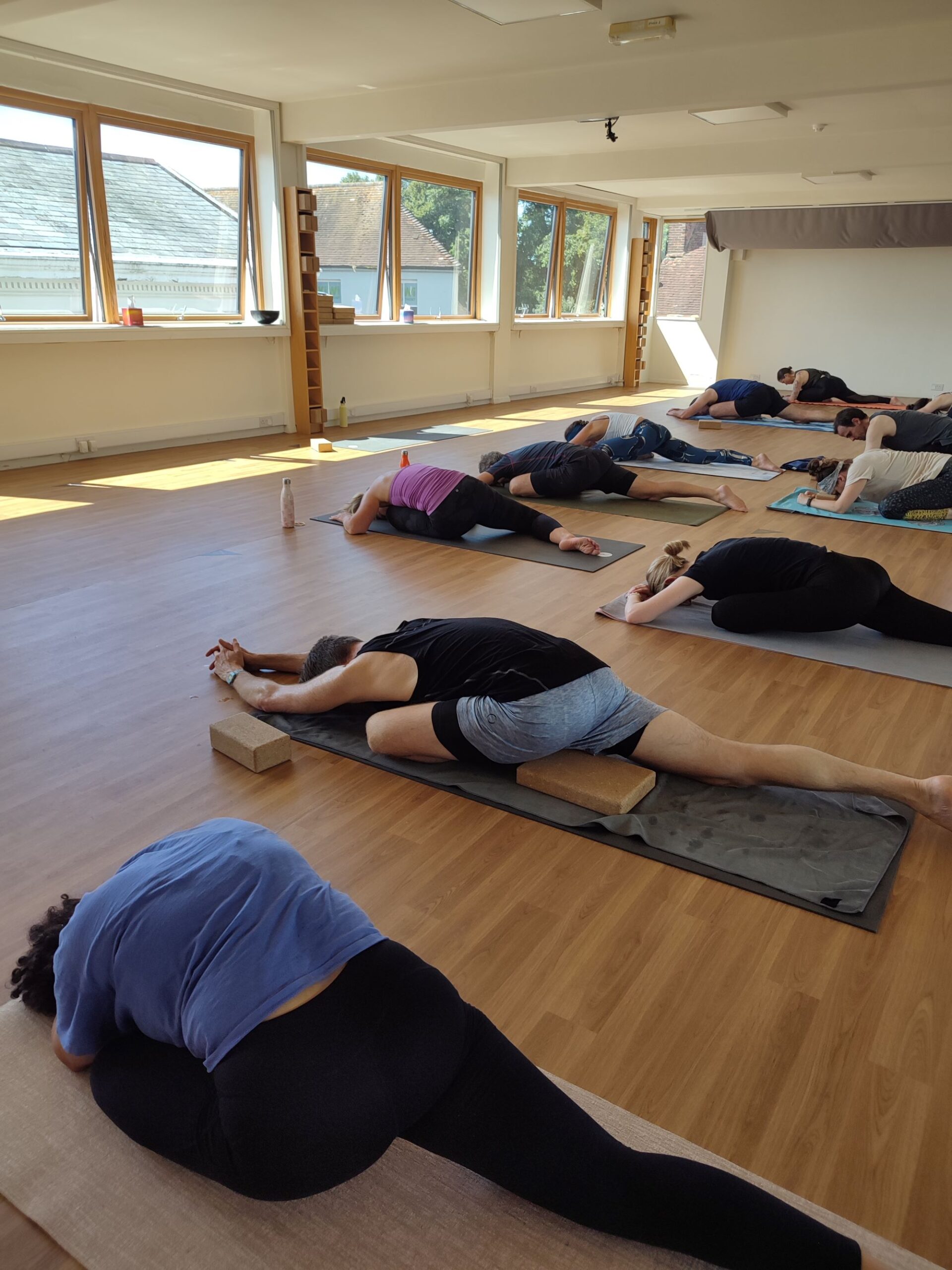

Depression and anxiety affect many people, and the right support looks different for everyone.
Research into hot yoga and depression is still developing, but early findings suggest it may play a helpful supporting role.
The evidence is still growing, but the findings so far are encouraging.
What do the studies show?
One key study followed adults with moderate-to-severe depression over eight weeks.
One group was offered heated yoga classes. The other was placed on a waiting list.
By the end of the study:
- Almost 60% of the heated yoga group experienced at least a 50% reduction in symptoms.
- Around 44% were considered to be in remission.
- In the waiting-list group, both figures were around 6% (1).
Perhaps the most interesting part was how realistic the practice was.
Participants were not practising every day. On average, they attended just over one class each week.
Regular, but manageable.
Researchers later returned to the same trial. They found that people who attended more classes tended to experience greater reductions in depression scores (2).
What about anxiety?
There is less research on hot yoga and anxiety, but the findings so far are positive.
One study found that regular Bikram yoga practitioners reported lower anxiety and improved mood after a single class (3).
Broader research also suggests yoga-based practices may help reduce symptoms of anxiety and depression (4).
What about the heat?
Heat is central to hot yoga, but researchers are still exploring whether it offers benefits beyond yoga itself.
A recent review found promising results for hot yoga and psychological wellbeing, while also highlighting the need for more research (5).
Final thoughts
Research into hot yoga, depression, and anxiety is still growing.
The findings so far are encouraging, but they should be viewed with care.
For some people, hot yoga may offer a practical way to support mood and mental wellbeing alongside wider support.
And perhaps the most hopeful message is this: one steady class a week can be a good place to start.
If you’re curious, we’d love to welcome you to a class.
References
- Nyer, M.B., Hopkins, L.B., Nagaswami, M., Norton, R., Streeter, C.C., Hoeppner, B.B., Sorensen, C.E., Uebelacker, L., Koontz, J., Foster, S. and Dording, C. (2023). ‘A randomized controlled trial of community-delivered heated hatha yoga for moderate-to-severe depression’. The Journal of clinical psychiatry, 84(6), no-page. https://doi.org/10.4088/JCP.22m14621
- Copeland, D.I., Mac Giollabhui, N., Foster, S., Arnold, C., Raslan, H., Lind, S., Nagaswami, M., Streeter, C.C., Uebelacker, L., Fisher, L.B. and Dording, C. (2026). ‘Heated yoga thaws depression: A dose–response analysis from a randomised controlled trial’. Journal of Affective Disorders, p.121647. https://doi.org/10.1016/j.jad.2026.121647.
- Szabo A, Nikházy L, Tihanyi BT, Boros S (2017). ‘An in-situ investigation of the acute effects of Bikram yoga on positive and negative affect and state anxiety’. J Ment Health, 26(2), p.156–160. https://doi.org/10.1080/09638237.2016.1222059
- Martínez-Calderon, J., Casuso-Holgado, M.J., Muñoz-Fernandez, M.J., Garcia-Muñoz, C. and Heredia-Rizo, A.M. (2023). ‘Yoga-based interventions may reduce anxiety symptoms in anxiety disorders and depression symptoms in depressive disorders: a systematic review with meta-analysis and meta-regression’. British journal of sports medicine, 57(22), p.1442-1449. https://doi.org/10.1136/bjsports-2022-106497
- Willmott, A.G., James, C.A., Jewiss, M., Gibson, O.R., Brocherie, F. and Mee, J.A. (2025). ‘Hot yoga: A systematic review of the physiological, functional and psychological responses and adaptations’. Sports Medicine-Open, 11(1), p.110. https://doi.org/10.1186/s40798-025-00917-7
